
The role of the regulating valve in the pipeline
In the automatic control of modern factories, regulating valves play a very important role, and the production of these factories depends on the correct distribution and control of the flowing medium. Whether these controls are energy exchanges, pressure reductions, or simple vessel filling, certain final control elements are required.
The regulating valve acts as a variable resistance in the pipeline, which changes the process fluid.
Manually regulating valves provide a pressure drop in laminar flow conditions caused by changing valve resistance or "friction". This pressure reduction process is often referred to as "throttling". For a gas, it is close to isothermal adiabatic state, the deviation depends on the degree of non-ideality of the gas (Joule-Thomson effect). In the case of liquids, the pressure is dissipated by turbulent flow or viscous friction, both of which convert the pressure into heat energy, resulting in a slight increase in temperature.
A common control loop consists of three main parts. The first part is the sensitive element, which is usually a transmitter. It is a device that can be used to measure adjusted process parameters such as pressure, level or temperature. The output of the transmitter is sent to the regulating instrument - the regulator, which determines and measures the deviation between the setpoint or expected value and the actual value of the process parameter, and sends the correction signal one by one to the final control element - the regulating valve. The valve changes the flow of the fluid to bring the process parameters to the desired values.
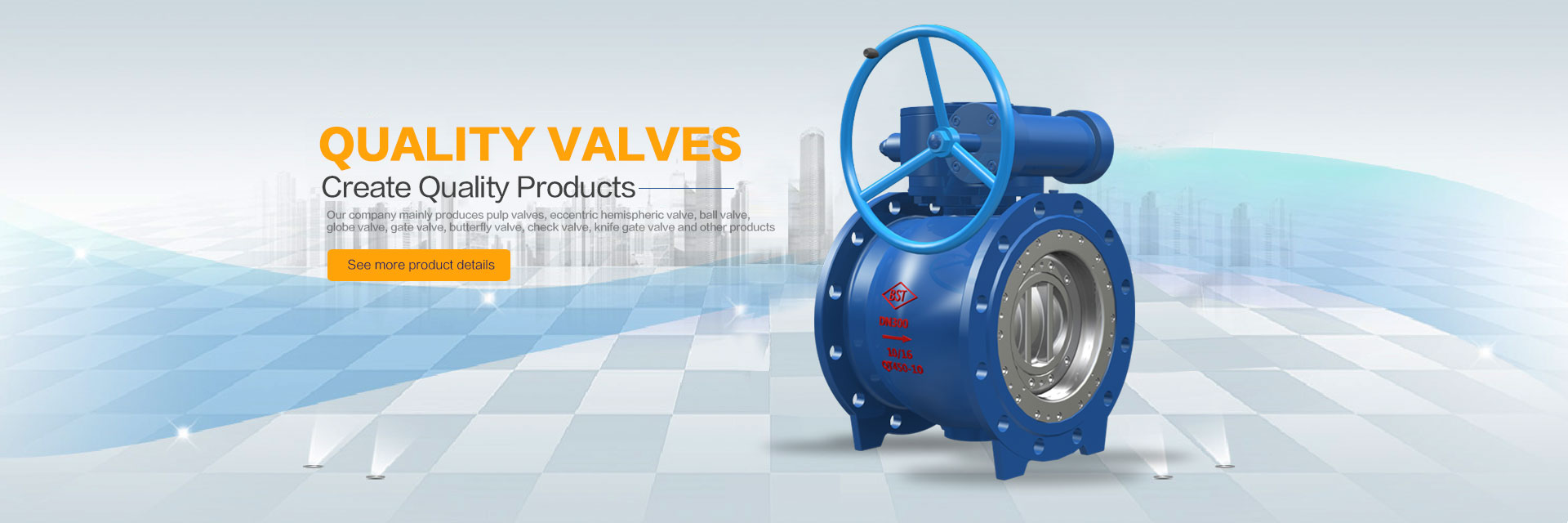
The control valve belongs to the series of control valves. Its main function is to adjust the pressure, flow, temperature and other parameters of the medium, and it is the final control element in the process loop.



Add:No.1 Changfu Xincheng, Wuhan Economic and Technological Development Zone
COPYRIGHT ? 2017,www.moqiew.com
BOSTER VALVE GROUP Co., Ltd
ICP 12018354 Support: Feng Sheng Technology